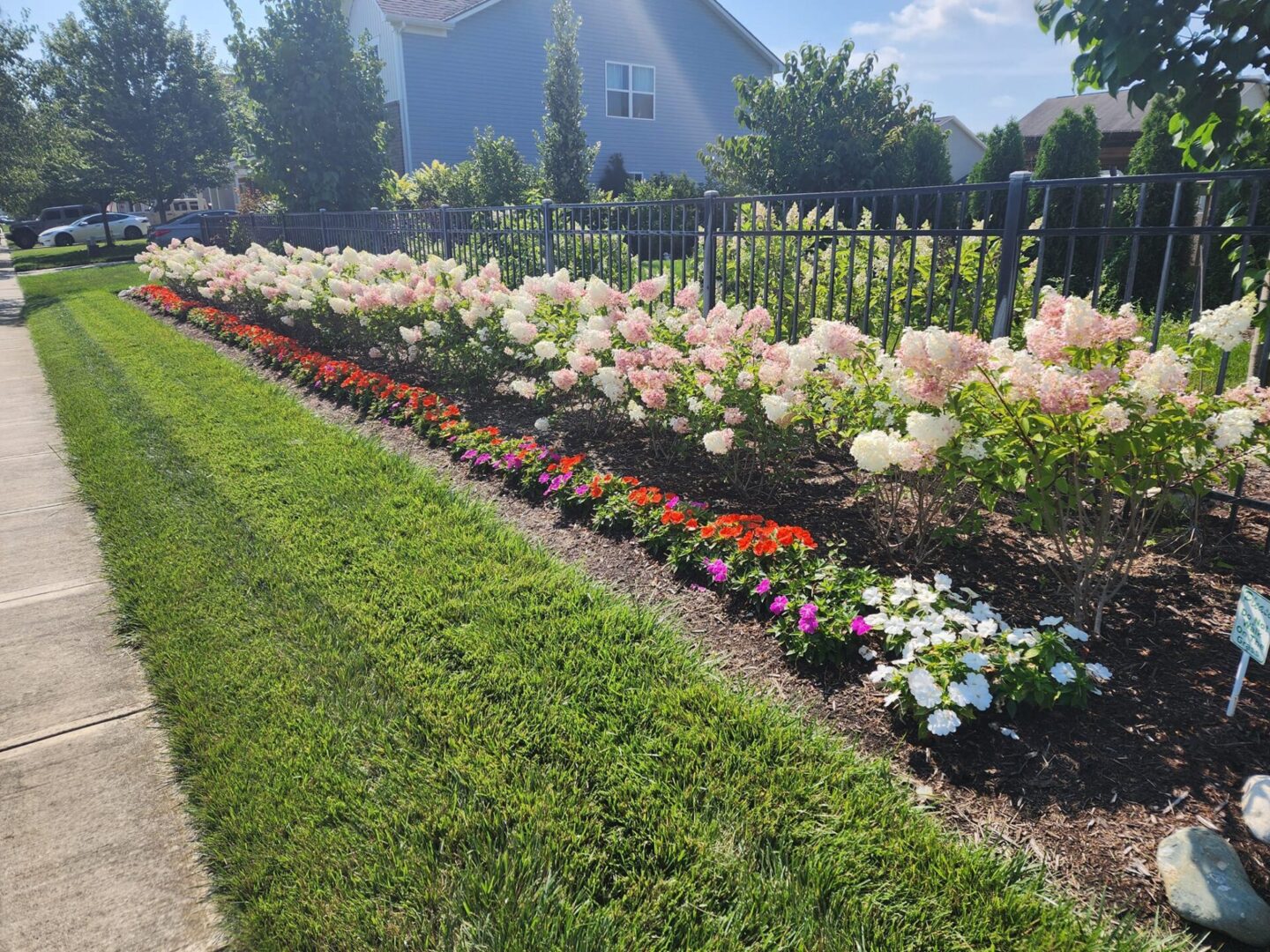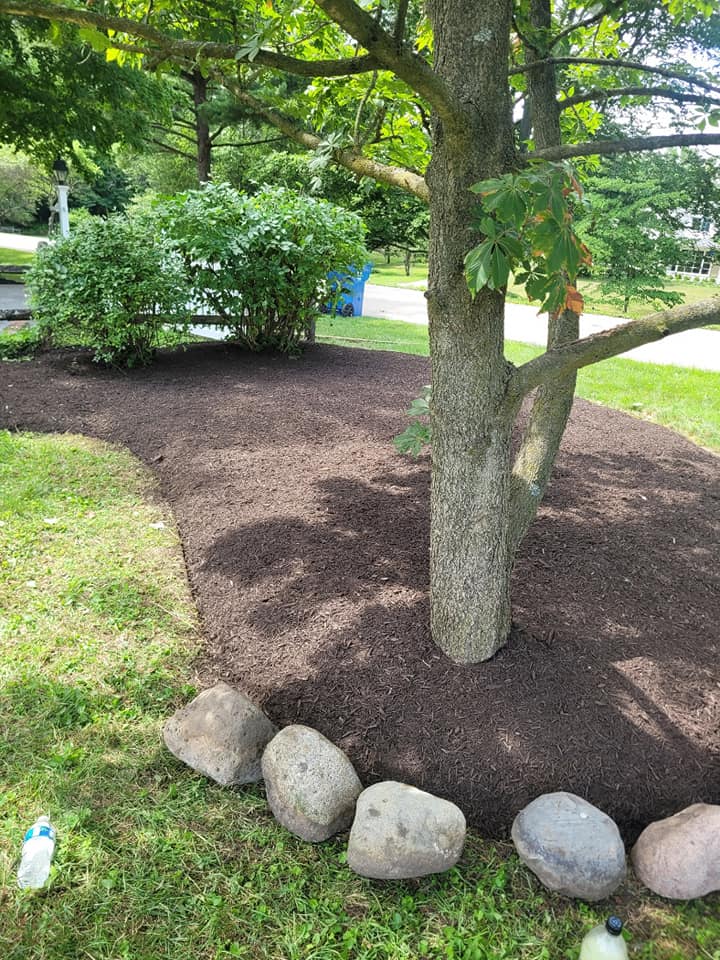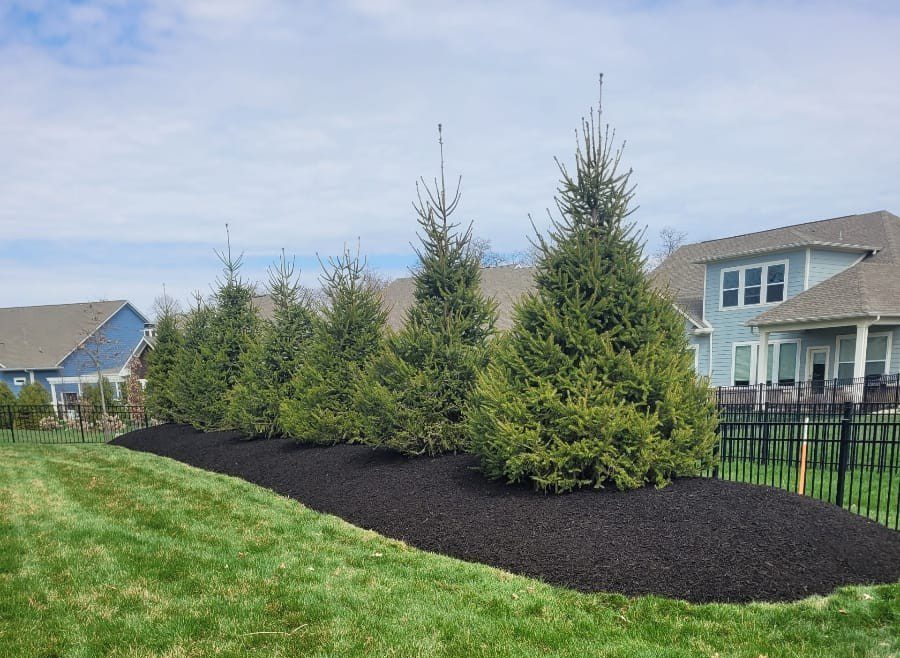
Elevate your gardens health and appeal with our premium mulching services. Our expert team ensures your soil retains moisture, suppresses weeds, and enhances fertility, promoting vibrant plant growth. Transform your landscape into a lush, thriving oasis.
Mulching is a critical gardening practice involving the application of materials over the soil surface around plants. These materials, known as mulches, can be organic—such as bark chips, straw, and compost—or inorganic, like stones, rubber chips, and landscape fabric. The primary purpose of mulching is to improve soil health and conserve moisture, but it also suppresses weeds, regulates soil temperature, and enhances garden aesthetics. By creating a barrier, mulches help maintain soil moisture by reducing evaporation, offer insulation to roots against temperature extremes, and contribute to soil fertility as organic mulches decompose. Additionally, mulching can prevent soil erosion and compaction, promoting a more robust and vibrant plant life.
Mulching is important for several reasons, paramount among them being its ability to retain soil moisture, which is crucial for plant health and water conservation. It reduces the need for frequent watering, thus saving time and resources. By suppressing weed growth, mulching minimizes competition for nutrients and water, allowing plants to thrive. Furthermore, as organic mulches decompose, they improve soil structure and fertility, encouraging beneficial microbial activity and providing essential nutrients to plants. Mulching also protects soil from erosion and compaction caused by rain impact and foot traffic, respectively. Aesthetically, a well-mulched garden looks neat and can significantly enhance the visual appeal of the landscape. In essence, mulching is a simple, cost-effective way to promote a healthy, vibrant garden ecosystem.
Consider mulching during the planting phase to give your garden a healthy start. Early spring is an ideal time, as the soil begins to warm, to apply mulch to retain moisture for the growing season and suppress early weed growth. However, waiting until the soil has adequately warmed up ensures that mulching does not inadvertently keep the ground too cold, potentially harming sensitive plants. In regions with hot summers, mulching in late spring can help keep plant roots cool. For gardeners seeking to improve soil fertility, applying organic mulch in the fall allows it to decompose over the winter, enriching the soil for spring planting. Additionally, refreshing mulch layers once or twice a year maintains its benefits and appearance. Assessing the specific needs of your garden throughout the year can help determine the best times for mulching to maximize its advantages.
DISCOVER WHAT OUR CUSTOMERS HAVE TO SAY ABOUT US
REVIEW US ON GOOGLE
Our process is simple and only contains a few simple steps

Fishers
Carmel
Westfield
Noblesville
Geist
Zionsville
Mccordsville
Pendleton
Fortville
Indianapolis